The Status of
(revised draft -- feedback appreciated,
send to authors)
In this time of concern over the future
availability and cost of power, the impact of global climate change and
problems with noxious emissions it is important to that we explore all
promising opportunities to reduce the US dependence on energy imports, and at
the same time reduce emissions and costs.
A question then is - Why hasn’t serious consideration been give to the
Double Acting Swash Plate Drive Stirling (da/sh)
engine. It can reduce fossil fuel
use and emissions at a cost competitive or lower than other future power
systems? The da/sh engine can:
·
Produce electrical power at a cost competitive with utility
power plants.
·
Double the miles per gallon of fuel over recent gasoline and
diesel cars and trucks.
·
Reduce energy vulnerability by making it possible to use
essentially any fuel or heat source.
·
Reduce consumption of fossil fuel beyond that of first
generation fuel cells.
·
Avoid the need to create new fuel delivery infrastructures.
·
Achieve environmental standards that are difficult for other
thermal power systems.
·
Cost less to build and operate than other power systems.
·
Be available in volume before other advanced power
initiatives.
The background these assertions is
summarized in the attached papers:
1
Introduction
to the Double Acting Swash Plate Drive Stirling Engines
2
Development of Double Acting Swash Plate Drive Stirling
Engines
3
Applications for Double Acting Swash Plate Drive
Stirling Engines
4
Operation
of Double Acting Swash Plate Stirling Engines
While the
information is presented from a U.S viewpoint, the benefits apply at least as
well to other nations. The economic and technical feasibility of the da/sh engine has been
established. Its commercialization only
requires effective, adequately funded engineering and development.
Attached is also the resume of the
author, Albert J. Sobey.
For further Information contact
Lennart Johansson at Lenstm@aol.com
Al Sobey at AJSobey@cs.com
Additional
information on which these papers are based can be made available on inquiry.
Imperfections
in formatting in this html version are the fault of Paul Werbos, not of the
author(s).
Double
March 2006
In this
time of concern over the future availability and cost of power, global climate
change and noxious emissions it is important that we seriously explore all
promising opportunities to make effective use of US energy resources and reduce
energy imports.
There has
been remarkable success in reducing the fuel use (and emissions) of internal
combustion engines (spark and compression ignition) by improvements in controls
and use of devices such as variable valve timing, superchargers, power on
demand and after treatments such as catalytic converters and particulate traps. Internal combustion piston engines are
approaching their practical (and theoretical) limits of efficiency and
emissions. Attempts to extend their
usefulness are time consuming and costly – in research and product cost.
Fuel cells
(using hydrogen) are still decades away.
While many authorities believe that they will ultimately be technically
and economically viable. There still
are serious technical (and cost) problems to resolve.
The Double Acting Swash plate type
Production da/sh engines can:
·
Produce
electrical power systems at a cost competitive with utility power plants.
Total energy effeteness equal or superior to coal
plants
Competitive costs at Sizes from 5->1.000 kW
·
Double
the miles per gallon of fuel over recent automobiles and trucks.
Equal or superior fuel consumption to hybrids
·
Reduce
energy supply vulnerability by using essentially any fuel or heat source.
Gasoline,
Diesel, Naphtha, Ethanol,. Methanol, hydrogen, natural
gas,
purpose grown and
waste biomass as well as solar
·
Reduce
consumption of fossil fuel beyond that of first generation fuel cells
Minimal energy consumed in fuel processing and
distributions
·
Avoid
the need to create new fuel delivery infrastructures
Can
use or simplify the existing liquid fuel delivery and retail systems.
·
Achieve
environmental standards that are difficult for other thermal power
Meet regulated emissions with little or no after
treatment
·
Cost
less to build and operate than other power systems
At comparable production volumes
·
Be available before other advanced power initiates.
Technical and economic feasibility established.
Commercialization only requires good engineering not
basic research
The fact that da/sh engines have fewer than half the parts of modern
gasoline engines will make it possible to build them at lower cost than
comparable internal combustion engines (at similar production volumes). Most of their components can be produced
using the same processes now used in the manufacture of automobile engine
components – thus reducing capital investment costs – and saving jobs.
The use
of constant process, ambient pressure,
heat input systems makes it possible for da/sh engines to meet environmental standards that internal combustion engines
can not meet economically (or at all in the case of noise). With development da/sh engines may be able to meet 2007 environmental standards
with an open tail pipe (no emission after treatments or mufflers)
The
efficiency of the first test da/sh engines was in the 30-35% range (Btu
in to shaft power out). The first
generation of upgraded JGT da/sh engines will be
in the 40-45% range with the target efficiency of 50-55%. These engines will be more efficient than
practical diesel engines and above the target (set by US Dept of energy) for
first generation Fuel Cells. The
ability of the da/sh engine to achieve these goals is
well established by internal and independent studies (by NASA).
The da/sh engines can be designed for different levels of cost and
reliability consistent with the intended application. Stirling engines for electrical power will be
designed for ten to twenty five years useful life with annual maintenance (Stirling
engines, built in
They can
use fuels with a wide range of energy content and do not require control of
cetane or octane content or energy content.
The simplification of fuel
processing may permit an increase in the yield per barrel of crude oil. They can use much lower Btu gas and are more
tolerant of dirty fuels and air than internal combustion engines. As more da/sh engines are deployed they will make gradual but significant reductions
in fossil energy use, noxious emissions etc.
da/sh engines can be available sooner than
other improved power systems. Serial
production could start in 2 to 4 years for electrical power (after commitment
of the needed resources). Development (and
demonstration) of vehicle propulsion engine will take longer. Serial production could start in 4 to 7
years.
They can
provide significant social benefits.
They can reduce the economic and social costs of serious energy supply
interruptions (accidents, vandalism or terrorism) more effectively than other
power systems. They can. reduce the need for
fossil fuels
First By improving the efficiency of power
generation (vehicle propulsion and electrical power generation and
distribution).
Second By using combustible materials which are not now considered to
be significant energy.
resources (agricultural, urban and indusial wastes etc)
The extent
of their national energy and environmental benefits can be estimated from the
size of the market for engines in the 2 kW to 1000 hp range. Approximately thirty eight million gasoline
and two million diesel engines were produced in the United States during 2005
by about thirty companies (about three times as many are produced overseas - proportionately more diesel engines).
The da/sh engines ability to use low grade or innovative energy
resources (wastes, solar power, geothermal etc) is complementary with the need
to use energy systems that will meet the needs of the growing global economy as
economic fossil fuel resources are exhausted
The da/sh engines
will have a long term future. . They
will make more efficient use of biomass and similar materials (urban and
industrial wastes etc.) than other power plants. They can produce power more effectively from
solar, nuclear or geothermal heat than steam turbines or fuel cells.
The
improved economics and performance the da/sh engines can provide have advantages for:
Owners and Operators of Electrical
Systems and Vehicles
Once their cost and performance advantages are
understood they should become the power systems of choice for base load or
emergency electrical power systems and for most vehicles (5 kW to >1000 hp).Their
ease of operation, performance and economics will be attractive to buyers
Government Energy and Environmental
Regulators
They will be able to meet future energy
and environmental standards that will be difficult for internal combustion
engines. Once their low to negligible (nitrous
oxide and particulate) emissions are understood their use may be, in effect, be
mandated.
Engine and Vehicle Manufacturers
They
will provide competitive advantages in cost, performance and low cost over
conventional internal combustion engines.
.
Development of new engine sizes (5 kW to >500 hp)
will take less time and cost less than equivalent internal combustion engines.
Energy Companies and Fuel Suppliers
They
will simplify the fuel slate and potentially increase the yield of useful fuel
from a barrel of crude oil and extend the life of the resources.
The total
market for da/sh engines may be larger than that of
internal combustion engines. . In 2005
approximately 38 million gasoline and 2 million diesel engines were produced in
the
There are
three primary reasons why the da/sh
First Until
recently internal combustion engines could meet energy and environmental
standards economically. The decision
makers saw no pressing need for a new kind of engine. Some engineers probably considered it a
threat to their authority and knowledge.
Second
There have been many unsuccessful attempts to develop
Third The
efforts to develop commercially competitive da/sh engines have not been adequately funded. Initial
investors had a limited view of its application and avoided developing the
technologies for high risk opportunities.
Lennart Johansson has raised sufficient capital to confirm the engines
technical and economic feasibility – but not to commercialize it. This was accomplished at a fraction of the
cost that would be required for a new gasoline or diesel engine.
The
commercialization of da/sh engines does not require research
breakthroughs – only adequately supported - good engineering and development.
Some of the
advantages of the da/sh engine are summarized on the following table
Double Acting Swash plate
Advantages over Internal Combustion Power Systems Include:
Low Capital Costs
da/sh engine
have fewer than half the parts of comparable gasoline or diesel engines.
An independent study found that da/sh engine based propulsion systems
should cost less than
equivalent internal combustion systems at volumes over 50,000
per year
Low Operating Costs
Can use Low (or negative) cost fuels.
The potential for low maintenance costs has been demonstrated.
Fuel (or heat source) Flexibility
The da/sh engines
can produce power from any source of heat (<700 to 1000 oC)
They can use any liquid fuel (naphtha, ethanol, gasoline diesel)
interchangeably, or any gaseous fuel (natural gas, hydrogen,
land fill gas) interchangeably, as
well as biomass, solar, combustible wastes, waste process heat etc. and solid
fuels.
High Efficiency
They will be as efficient as diesel engines - markedly
superior at part load.
The pre production engines are 30-35% efficient.
The first production engines will be 40-45%
efficient. The target is 50-55% -
High Energy Effectiveness - Resource to Power
The fuels for da/sh
engines do not require control of octane, cetane or foreign material content
thus reducing the
cost of (and energy consumed in) fuel processing and
distribution.
They will provide more kilowatt hours or vehicle miles
per unit original energy resource (oil, natural gas, coal, biomass
etc.) than other power
systems (including first generation fuel cells).
Low Emissions
The da/sh
engine uses a constant process ambient pressure burner (or heat input system). They can have very low
NOx, no measurable unburned hydrocarbons, CO, or
particulates - without after treatment
da/sh engines can meet some environmental standards (for
emissions and noise) with an open tail pipe.
Rapid Response
Idle to full throttle 1/3 second using variable swash plate (no emission peak) and will start easily.
High Reliability
150,00-200,000 miles for cars 1,000,000 + for trucks
25 to 50 years for electrical power, based on
thousands
of hours of operation in
intermittent
controlled explosions as with internal combustion engines.
Low Noise
Comparable to household appliances - Less than 58 db
at nine feet.
Can be designed for near zero noise, heat and electronic signatures
Ease of Manufacture
The da/sh engine has no
intake or exhaust valves, ignition only required for starting etc.
Most of the parts can be produced using similar manufacturing process
to those used for automotive piston engines.
Competitive weight and volume
Similar volume to equivalent diesel existing engines
(less when smaller transmissions are included).
The existing engines (assuming 6000 rpm for propulsion) weight 2.5 lb/ hp.
The target is 1.5 lb/hp
Availability
Volume production of
da/sh engines only requires good well supported engineering – no
research breakthroughs.
They can be available in volume within the time
required to develop high efficiency, low emission internal
combustion engines and much sooner than fuel cells
Development of
Double
March 2006
The
concept of the
The
availability of da/sh engines for electrical power
generation and vehicle propulsion should benefit most companies and users in
the power and vehicle communities.
Commercialization will require a much expanded effort – but is not
dependent on technical or research “breakthroughs”. Given adequate resources da/sh engines can be available in volume about as soon as the next
generation of internal combustion engines and much sooner than fuel cells.
The
development of modern
The next
major effort was that by United Stirling Company (
United Stirling
Some of the
family of kinematic Stirling engines that United Stirling designed have been
commercialized one (the V-160) by SOLO Kleinmotoren Gmbh a second (the 4-95) by
Stirling Energy Systems Inc. as well as by Kockums (the 4-275). Kockums installed
Lennart
Johansson managed the Unites
In 1977 Lennart Johansson was asked
to come to the
In the
process the rights to the 4-95 test engine were
acquired by
Lennart
Johansson acquired the rights to the underlying technologies.
Three
sizes of the Double Acting Swash plate drive external Heat
(da/sh) engine were designed at STM Power
Inc. two under Lennart Johanssons direction (including the 4-70 for hybrid
drive, the 4-120 (25-30 kW) designed for use with land fill gas. He provided the basic design of the 4-260 (55
- 60 kW) before creating
When STM’s Board decided to
concentrate on production of da/sh engines for use with landfill gas (in
2003) Lennart Johansson created Johansson Global Technologies (JGT). His objective was to create and expand the
center of technical excellence for
Lennart Johansson has managed the
development of the da/sh engine in the
We do not
have adequate information to provide defense be estimates of how much the
deployment of the da/sh engine will reduce energy dependence
– with confidence. It should be a
significant improvement – a supplement to any other energy strategies. Some insight can be gathered from the size of
the internal combustion engine market.
In 2005 nearly 40 million internal combustion engines were built by US
industry for a wide variety of markets. da/sh engines could replace gasoline and diesel engines in essentially all
markets they now dominate as well as induce new markets.
The next
stages in the da/sh engines development will include:
·
Design
and demonstration of a family of improvements that will increase the
effectiveness of da/sh based power systems
·
Adapt
the heat input systems to use non traditional fuels and reduce cost and weight.
·
Adapt
the engine design to a range of potential applications - small and large power
plants, commercial, personal and recreational vehicles etc.
·
Conduct
demonstrations to confirm the performance and reliability of the new generation
of da/sh engines for a range of competitive applications.
·
Initiate
sales to the markets for producing power from traditional and non traditional
fuels.
Assuming adequate resources the first generation of da/sh engines for distributed power should be available in two to
three years. It will take 4 to 6 years
to complete development for propulsion and release them for use in
vehicles. Operational demonstration of
the first generation of da/sh engines (coupled with reliability
and performance experience in electrical power) are expected to be required to
obtain the support of the automotive community
The
relationships between the principal
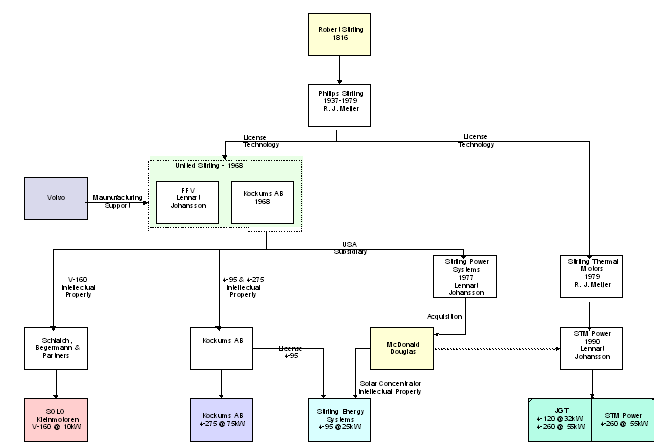
da/sh
Not shown are
the license Philips granted GM and Ford.
Both attempted to develop vehicle propulsion versions of the rhombic
drive engines.
There are two versions of the da/sh engine one
with a fixed swash plate and one with a variable swash plate. Only the variable swash plate version has the
power response characteristics required for vehicle propulsion (or electrical
load following).
Other
companies have worked on
Applications for
Double Acting Swash Plate Drive Stirling Engines
October 2005
In theory da/sh engine could replace internal combustion engines in nearly
every market they now dominate. This
could provide benefits for all sectors of the electrical and automotive
communities.
Their use will reduce
cost of ownership (purchase, operating, maintenance)
Manufacturers can use, or
adapt, the same processes used to produce internal combustion engines.
They will reduce the
costs of fuel producers and avoid major expenditures for new infrastructures.
They will make it easier
to meet energy and environmental regulations
They can be adapted to a
large number of applications
They are easy to operate
da/sh engines can use essentially any
source of heat provide (combustion of liquid, solid or gaseous fuel, waste
process heat, solar energy). Their
total costs (purchase, fuel and maintenance) will be similar to or lower than
competitive systems. Their high
efficiency, low emissions make it possible for da/sh engines to meet energy and environmental standards that other power
systems find difficult. Their low noise
and vibration levels make it possible for to install da/sh engines in places where internal combustion engines are not
acceptable
Public and
Private decision makers need to know how competitive power systems compare in basic
terms: (use of existing fuel resources, emissions, life, cost and performance) The relative order of superiority provides
more insight into their potential level of use than projecting if and how much
candidate power systems will change the performance an existing product (i.e. a
Chevrolet Impala or Lexus)
The da/sh engine is divided into three sections which can be used in
various combinations. The heat input
System, the power systems and the power output systems. The same basic power section can be adapted
for the two primary markets by changing the heat input systems, operating
speeds, power output (generators or transmissions). The differences will be driven by fuel
arability, product performance requirements and trade offs between cost and
design life.
A third market - generating cryogenic
temperatures and space cooling is not addressed in this paper.
Its
advantages include higher efficiency, ease of control as well as elimination of
the need for freon type working fluids. Over 5,000 cryogenic systems developed by
Philips are in use by air forces and hospitals to produce liquid oxygen and
nitrogen.
The peak efficiency of existing da/sh engines is 30 to 35% (Btu in to shaft power out). JGT plans to increase the efficiency to 40 to
45% in its first production engines (A NACA study confirmed that 50 to 55% is
feasible). This will require increasing
cycle temperatures to approximately 1000 oC. The high efficiency engines will use low cost
high temperature materials and manufacturing technologies developed in
cooperation with Oak Ridge National Laboratories and suppliers.
Future da/sh engines (55%
efficiency) will be more efficient than practical internal combustion
engines. Da/sh engines only need a source of adequate heat (700 to 1000
oC). Their fuel (or heat
source) tolerance will simplify the process of producing and distributing
liquid (and gaseous) fuels thus reducing the quantity of energy resources (natural
gas, coal, petroleum etc.) required per unit power below that of internal
combustion engines.
Extensive use
of fuel cells that require 99.99+% pure hydrogen would
substantially increase the consumption of natural gas (from which the hydrogen
could be made) or require construction of additional electrical power plants
(to produce hydrogen by electrolysis).
The
capital and operating costs of the da/sh engine will be significantly lower than that of competitive internal
combustion engines or fuel cells. The
first (low production) da/sh engines have a total cost advantage
(acquisition and operating) over modified (spark equipped) diesel engines
operating on dirty (landfill etc.) gases for stationary or distributed power
applications. They can use much lower btu gas and can tolerate variations in heat content and
dirty atmospheres.
da/sh based distributed electrical power
systems will operate for more than ten years between major overhauls and 8,000
hr. between routine maintenance. The
heat input systems can be designed to use any liquid fuel (interchangeably) any
gaseous fuel (interchangeably) as well as solid fuels (purpose grown biomass,
waste, - hazardous or negative value) solar energy and waste process heat. The
480 cc da/sh engine (four 120-cc cylinders) when
optimized for long life produces 24 kW (45 hp) at 1800 rpm (peak efficiency).
da/sh solar hybrid systems can be designed
to produce electrical power (in the Sun Belt) at a cost competitive with
utility power plants. Three
demonstration Solar hybrid systems were installed in
Several
sizes of da/sh engines have been built 280 cc (15
kW), 480 cc (25 kW) and 1040 cc (55 kW).
Collectively they have accumulates over forty thousand operating
hours. The same 480 cc
Existing da/sh engines modified for propulsion (higher operating speeds) will
weigh less than 2.5 lb. per hp (target is 1.5 lb. per hp). da/sh engine for cars will be designed for more than 4,000
operating hours (heavy trucks for 20,000 hr.).
The automotive versions are comparable in size to internal combustion
engines and have superior transient characteristics (ease of starting -
acceleration idle to full power in 1/3 second with no emission spike).
The wide flat torque speed
relationship of da/sh engines make it possible for da/sh engine
base propulsion systems to use transmissions with half or fewer gears than
comparable gasoline or diesel engines.
A class 8 truck with the 1500 cc da/sh engine will get slightly better acceleration and fuel
economy with a manual four speed box compared to a ten speed box with a two
speed rear end.
da/sh engine
based propulsion systems can be designed to operate on any liquid (or gaseous) fuel
that will produce 700 to 1,000 oC.
They can use naphtha, ethanol, methanol, gasoline, diesel fuel and some
unprocessed petroleum interchangeably.
The fuel tolerance of da/sh engines will permit simplification
of the production and distribution of liquid fuels (they do not need high
octane or cetane and will minimize the need for boutique fuels). The use of da/sh engines (depending on market penetration) could make it possible to
optimize refinery yields in terms of the energy content of the delivered fuel
rather than control of cetane or octane etc. to produce a prescribed slate of
gasoline and diesel fuel etc.
Because
There are
eleven primary factors which decision makers should consider when comparing the
relative energy performance of competitive power systems. They include initial (purchase) costs,
operating costs, engine (power system) efficiency, energy effectiveness (the
percent of energy resources converted to power) the ability to meet regulated
emission (and carbon dioxide generation) as well as noise. Other criteria which differ with the
applications include responsiveness (starting and power changes) weight and volume,
reliability – and availability
In
addressing the relative energy effectiveness of competitive power systems six
major items should be considered.
1
The
Application – whether for distributed power, electrical power back up etc. or
in cars trucks and pleasure craft [1].
2
The
development status of the power system
3
The
energy consumed in producing the fuel or energy source used.
4
The
energy consumed by the power system and auxiliary equipment.
5
The
difference in the efficiency of power system at a range of powers
6 The
Uncertainty of delivered performance due to design objectives, manufacturing
tolerances and differences in the processing and distribution (distance, mode
etc) for fuel,
One way to
screen competitive vehicle power systems is to compare the magnitude of the
improvements (positive or negative) at two power conditions.
·
First Near the most frequently used power (i.e. road load)
·
Second Near maximum. Power
These power conditions (20 % or road
load power and 85 % or acceleration and hill climbing power) account for the
differences in engine efficiency with power.
This brackets the normal operating range of vehicle power plants
[1] On the Federal Urban driving cycle (FUDS)
73% of the time the power is at or below 20% of
maximum. On the Federal Rural Driving
Cycle (US06) 74% of the time power is at or below 35% of maximum
The
relative energy benefits depend on the share of time spent at the different
power levels (including idle and braking).
That in turn depends on the vehicle duty cycle whether a transit bus,
intercity truck or car used primarily for urban or intercity driving.
The
following table compares the fuel consumption of fourteen popular combinations
of engines and fuels “well to wheels” and “tank to wheels” for the two power
conditions. It lists the percent of the
original energy (oil, coal, natural gas, biomass etc.) delivered as useful power both - tank to wheels - and - well
to wheels - and at two power levels terms of the percent of energy delivered to
the wheels (or electrical grid) compared to a good gasoline internal combustion
engine at the same condition
Tank to wheels consumption includes
The energy consumed in on board energy storage, (pressurizing
tanks, charge-discharge loses for batteries) the efficiency of the engine (or
fuel cells) power conditioning, transmissions and drive motors.
Well to wheels consumption includes
The above plus the energy consumed in producing
(wells, farms or mines), collecting, transportation, processing (refining etc) ,
distributing (pipeline, railroad or truck) and storing the fuel at the
refueling station (as a liquid or gas)
Comparison of Percent
Power Delivered to Wheels
With 2006 Gasoline
Piston Engines
Propulsion System Efficiency Total
System Effectiveness
Tank to Wheels Well to Wheels
20% Power 85% power 20%
Power 85% power
NEAR
TERM
2005 Spark Ignition – Ethanol from corn +30% To -30% +15%
To - 25% +300% To +35% +300% To +45%
2005 Spark Ignition – Natural Gas +50% To
-20% +35%
To - 15% +100%
To -15% +75% To -15%
2005
Compression Ignition - Diesel - 20% To- 55% - 30% To- 45% - 25%
To - 55% - 02% To - 50%
First
DA/SH engines - Middle Distillate - 50% To- 60% - 05%
To- 35% - 45%To - 60% - 02% To - 40%
LONG TERM
Improved Spark Ignition – Ethanol from corn - 05% To - 40% - 05% To - 35% +140%
To +20% +260% To
+20%
Improved Spark
Ignition - Natural Gas - 05% To - 40% - 05% To - 35% +05%
To - 45% + 05% To
- 35%
Improved
Compression Ignition – Diesel - 45% To - 55% - 70% To - 55% - 35%
To - 55% - 35% To - 60%
PEM Fuel Cell – Hydrogen from natural gas
- 45% To - 55% +15% To
- 20% +200% To +20% +600% To +150%
PEM Fuel Cell – Methanol from natural gas - 35%
To - 55% +45% To - 10% +05% To +45% +140% To+30%
Future Fuel Cell - Hydrogen
from natural gas - 70% To - 75% - 40% To
- 55% +120% To - 25% +300% To +45%
Future
Fuel cell - Methanol from natural gas - 55 % To -
70% - 15% To - 45% - 55%
To - 70% - 08% To - 45
Future DA/SH ENGINE – any liquid fuel - 70% To
-75% - 40% To - 50% 70% To
- 80% - 40% To
- 60%
Base
Average
Efficiency of 2006 Spark Ignition Gasoline 09% 12% 15% 14% 19%
23 % 6% 9.6%
12. % 10%14.7%19%
The most
probable values for any combination of engine and fuel are near the average of
the high and low values listed.
The table is based on information from various
sources, from engine developers, environmental advocates, energy and engine
company economist’s etc. It is a summation of the highest and lowest of their
suggestions (or where possible published data).
It is
not based on a statistical analysis
The range show high
% to low % (efficiency or effectiveness) is based on to the uncertainties in
fuel processing and delivery as well as differences in power plant efficiencies
etc. The chart illustrates the
difficulty in determining which of the candidate power systems will be most
energy effective. It is probable that
several power systems will be continue to be used depending on application and
fuel availability.
The assumptions and methodologies used are available in separate reports
This table
indicates that the first generation da/sh engines should provide nearly twice the miles per gallon of a gasoline
engine at 20% power (50% to 60% more) and up to 40% more miles per gallon at
85% power. The performance of first
generation da/sh engines is similar to advanced
diesel engines and Proton exchange membrane (PEM) fuel cells using
methanol. Well to wheels reductions in
use of resources for first da/sh engines are similar. Future da/sh Stirling engines (55% efficient) will provide from three to
four times the miles per gallon of a gasoline engine (70 to 75% more) tank to
wheel and about half that of gasoline engines (40 to 60%) considering well to
wheels energy effectiveness.
If accurate projection of a vehicles
fuel economy (MPG) are required – the share of time at all applicable power
conditions – defined by the duty cycle should be evaluated (including fuel use
at idle and during accelerations). The
total benefits of competitive propulsion systems depend on the source of the
fuel (biomass, coal etc.) and the objectives (reducing fossil fuel imports
etc.)
The
effectiveness of direct electrical and battery electrical propulsion systems
have been addressed in other studies.
The uncertainty includes the fact that the efficiency of the utility
power plant (average 30-35% best 50%) coupled with the distribution loses and
the cost of batteries makes their energy effectiveness and cost uncompetitive
with da/sh engines for most vehicle
applications (depending on the source of energy for the electrical systems and
cost of petroleum). If zero emission
range is mandated by law the combination of
GM demonstrated a zero
emission
The poor energy effectiveness of
biomass derived ethanol is primarily the result of the energy consumed in
collecting and transporting the corn to central processing stations. Up to three times the energy (in
electricity) can be produced by burning the corn in a Stirling engine at a
place adjacent to the place where it is grown
(burning the corn stover will further increase the useful power output). Farmers in
Table two summarizes the
characteristics of the da/sh engine is to rank order them and thus provide a basis
for assessing where the engine could be best used.
Qualitative Ranking of Attributes
Double
Relative to Competitive Power
Systems
Rankling 1 (poorest)
10 (best)
Compression Spark Micro PEM DA/SH
Ignition Ignition Turbines Cell
Initial Cost 8 LOW 9 LOW 6 HIGH ? HIGH 10 LOW
Operating Cost 7 LOW 8 LOW 9 GOOD ? UNCERTAIN 10 LOW
Efficiency 8 LOW 6
LOW 5 LOW [1] 9 HIGH [2] 10 HIGH
Energy Effectiveness 9 LOW 7 LOW 6 LOW ?
POOR 10 HIGH
Regulated Emissions 5 POOR (NOx) 6 POOR 4 POOR ? LOW 9 LOW
CO2
Emissions 5 POOR 4 POOR
3 POOR ? UNCERTAIN [3] 10
LOW [4]
Noise 6 HIGH 7 HIGH
4 HIGH ?
UNCERTAIN 10 LOW
Responsiveness 9 GOOD 9 GOOD 5 SLOW ? UNCERTAIN 10 FAST [5]
Weigh and Volume 7 GOOD 9 GOOD 10
LIGHT ?
UNCERTAIN 9 GOOD
Reliability 8 GOOD 7
LOWER
9 GOOD ? UNCERTAIN 10 BEST
Availability 10 NOW 10 NOW ? UNCERTAIN ? UNCERTAIN ?
[1]
Micro turbines have poor off peak power efficiencies
(In vehicles)
The peak efficiency of combined cycle utility turbines is high (50 %+)
[2] Fuel Cells have the potential to
be the most efficient
[3]
Depends on how the hydrogen is produced and distributed
[4]
Near zero if the da/sh engine
uses biomass or wastes
[5]
With a variable swash plate
In theory,
da/sh engines could replace spark and
compression ignition engines (and micro turbines) as well as preempt the market
for fuel cells in essentially many of their applications. For example:
·
Cities
can produce electrical power from urban wastes at a cost competitive with other
electrical generation technologies while reducing disposal costs.
·
Cities
(or large buildings) with central or district heating systems can use the same
heat producing boilers to provide the heat for da/sh
·
Farmers
can reduce energy costs by using purpose grown biomass or agricultural wastes
to meet their electrical and heat needs.
In
·
Da/sh engines
provide a way for local utilities to create the capacity to meet incremental
demands at low cost. They can improve
the total system reliability; reduce the dependence on electrical
interconnecting grids and thus their liability in case of power failures due to
weather, accidents, vandalism etc.
·
Home
owners and small businesses can insure the reliability of their electrical
power by using da/sh engines for base load and emergency power (and heat)
·
The
fuel consumption of personal cars and commercial vehicles could be reduced to
or below hybrid levels without the complications or costs of batteries and
electric motors.
·
da/sh engine
based propulsion systems for cars and trucks can achieve environmental
standards that are difficult or impractical to meet with internal combustion
engines.
·
Hybrid
solar thermal systems can produce power at rates competitive with conventional
utility power systems in areas with high incidence of solar energy
·
DA/SH
engines can use unprocessed crude oil to power oil wells. Electrical power can be produced at natural
gas wells which have too low a yield or are too remote for conventional
collection systems
·
Low
noise, high efficient auxiliary or propulsion power for yachts and recreational
vehicles would be a unique high profile market
·
The
da/sh engines power is independent of altitude an advantage
for trucks and other vehicles in mountainous regions and may be attractive for
light aircraft and auxiliary power.
·
Cost
of operating construction equipment (earth movers, temporary electrical power
generating systems etc.) can be reduced because of the da/sh engines
tolerance of dirty atmospheres and their low noise.
·
The
need to import fossil fuels (oil and natural gas) could be reduced
significantly
·
Noxious and green house gas emissions can be reduced
significantly
·
The
vulnerability of the
JGT recognizes the potential size and
complexity of the market this represents. da/sh engines could replace gasoline and diesel engines in essentially all
markets they now dominate. In 2005 nearly 40 million internal combustion
engines were built by US industry for a wide variety of markets
.
Over 35 million gasoline engines
20
million less than 5 hp,
11.5 million 100 to 300 hp and
2.5 million over 300 hp.
Over 2.2 Million diesel engines
17,000 under
50 hp
1.1 million 200
to 500 hp
11,500 over 1,000 hp.
Source Diesel Progress Magazine June 2005
The da/sh engine may take an increasing share of the growing markets in nations
that lack effective electrical grid networks and are more dependent on
hydrocarbon based fuels than the United States.
Not only would it be difficult to
create a business to address all of these markets in a timely manner, it
probably would not be allowed (antitrust).
In addition to building engines (and critical components) for selected
markets JGT intends to license these technologies to companies that understand
the markets and are qualified to adapt and/or manufacture the da/sh engines.
Cooperating with qualified companies will accelerate the deployment of
da/sh engines – and provide income for JGT in markets where it would not
otherwise be qualified.
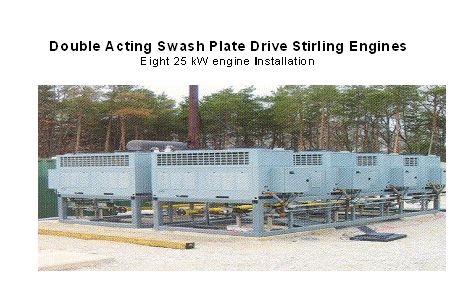
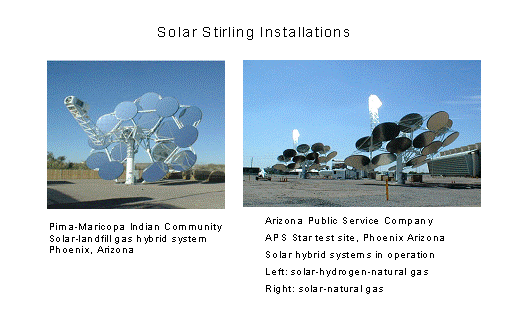
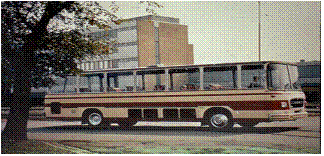
The Photographs on the
next page illustrate three applications where
1, A bank of 25 kW (4-120) da/sh engines that operated
on land fill gas
2. Three demonstrated
hybrid solar systems that operated on solar energy when available,
One used and
natural gas, one used land fill gas and the third used hydrogen produced from
excess power during the day. The da/sh type engines
were interchangeable
3,
A Swedish Stirling powered bus
demonstration
|
|
Operation
of Double Acting Swash Plate Stirling Engines
September 2005
η = T
max – T ambient
T max
The basic operation is similar for all
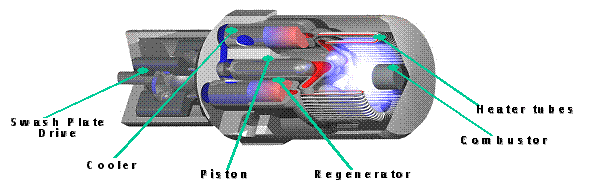
Double Acting Swash Plate Stirling (da/sh) engines consist of three major elements [1] an
external heat system [2] a power section (or short block) where the
power is produced and [3] a power output to an electrical motor,
transmission etc.
[1] The external heating systems (combustor
and heater tubes) can be designed to use a variety of heat sources including
combustion of any liquid fuel (interchangeably)- any gaseous fuel (interchangeably)
solid wastes, solar energy, waste or stored heat etc. The temperature of the hot section of the
engine is held constant by control of the heat input (compensating for any
differences in energy content of the fuel)
[2] The short block produces the power (by the
Stirling Cycle). It contains four cylinders,
four double acting pistons, the regenerators and the cooling system. There is no direct contact between the heat
source and the captive working fluid in the short block. The power section needs no lubrication.
[3] The power output can be through either a
fixed or variable swash plate.
Double Acting
The four double acting pistons in da/sh engines
have two functions.
First:
To produce power.
Second: To transfer the working fluid from the hot
space above one piston to the cold space below an adjacent piston and
back.
There are four independent gas
enclosures. They connect the bottom (cold
end) of one cylinder to the top (hot end) of an adjacent cylinder. They are charged with high-pressure (2,200
psi) hydrogen that serves as a working fluid (helium and other gases can be
used but reduce the performance). The
high temperature (expansion) spaces are maintained at the desired temperature by heat from the
external heat input system. The cold (compression)
spaces are maintained at the desired (low) temperate by a liquid cooling system
using conventional automotive radiators.
The gas being transferred from the cold to hot sections passes through
three heat exchangers
1.
A heat exchanger adjacent to the expansion volume Heat Input
2.
A regenerator located between the heater and the cooler Heat storage
3.
A cooler adjacent to the
compression volume Heat
rejection
The four
regenerators store heat during the compression cycle and release it during the
expansion (power) cycle (thus conserve heat to increase efficiency).
The differential pressure across the
piston provides the power. It is a
function of the difference in the temperature of gas at the top of one piston
to that of the gas at the bottom of the adjacent piston (same gas enclosure). Each of the four pistons is at a different
point in the thermal cycle. Power output
of each piston is sinusoidal. When
combined by the swash plate the power out put is constant – electric motor
like. The power output is independent
of altitude and advantages in the high mountains (or for aircraft).
The power output of a da/sh engine is almost linear with speed (at
a fixed swash plate angle). Changing the
angle of the swash plate changes the stroke of the pistons thus the power
output of the engine at a given speed.
Swash plate da/sh engines can accelerate from idle to
maximum power in 1/3 second (faster than gasoline engines).
The
The continuous process ambient pressure heat
input systems (99.9+% complete combustion of liquid and
gaseous fuels) provide exceptionally low NOx emissions. Unburned hydrocarbons, CO, and particulate
levels are not measurable. Control of
emissions is much easier in a constant process burner than in the intermittent
combustion processes of an internal combustion piston engine.
The manufacturing processes used for piston
engines can be used to produce most of the da/sh engine components. No critical
materials, catalysts or expensive manufacturing processes are required.
Other
Albert (Al) Sobey
EMPLOYMENT HISTORY
Allison
– DIVISION GM
1945 - 1962
Flight Test Engineer
Last Piston Engines
(V-1710 in P-38, W-3460 in B-39) and
first Jets (J-33 in F80 & F-92, J-35 in F-89)
Department Head Turbine Engine Controls
Section Chief Rocket and Space Power Research –
Solid and Liquid Rockets,
GM
GM Research, Engineer In Charge – Transportation System
Analysis Designed
GM full scale aerodynamic wind tunnel
Chair -GM Corporate Vehicle
Performance Assessment Committee
Transportation Technology
Inc. 1967 - 1972
President and
Founder Vehicle and Material handling licenses from GM.
Controlled
Flxible Bus and
Booz
Allen & Hamilton 1972
-1974
Principal Transit and Rail Practices
-
Introduced Articulated Buses to the
GM Transportation Systems
1974 – 1980
Manager Divisional
Planning and New Business Development
Assessed
future technical and business environments for personal
and commercial transportation – Sponsored
Urban Energy Assessment
Organized assessment teams(GM and outside) for Lean
Machines, RoadRailers,
Railroad scheduling controls, Combined cycle
turbines etc
GM Economic Staff 1980 - 1987
Sr. Director
Energy and
Advanced Product Economics
Provided
Energy price and availability forecasts for GM Management
Evaluated new product
technical and economic feasibility
Assessed
unrealized value of GM Technical developments
Initiated GM innovative power program (Fuel Cells)
Sponsored The
Energy Modeling Forum at
Member
- GM Corporate New Business Advisory
Committee
Albert Sobey and Associates 1987- Present
Provides professional services on energy, transportation and
business strategies.
Clients
have included: GM, Exxon,
Dow, Eaton, STM Power,
Created
the energy propulsion panel – (merged in 1992 with
the older energy economics panel)
Participants include: Arco, Amoco, Aramco, BP, Chevron, Exxon, Mobil,
Petro
Other Chairman -
ENTRAB Services, Partner - Johansson
Global Technologies
PROFESSIONAL
MEMBERSHIPS
Fellow of the Society of Automotive Engineers
Member of the American Society of
Mechanical Engineers
Member of the National Association of
Business Economics
Licensed
Profession Engineer
Member - Supply and Demand Task Force National Petroleum Council
Member - Heavy Engine Advisory Committee
Member of
the Technical Advisory Board
Member of
the Board Michigan
Product Development Corporation
Member of
the Board
Member of
the Board
Member of the
Board
Member of
the Board Center
for Cooperative Innovation
Trustee of
the
Education,
Publications, Patents, Honors
Bachelor of Mechanical Engineering
Degree From
General Motors
Institute 1945
Honorary Doctors
Degree From
Over
100 Unclassified Papers On Engines, Fuel Systems,
Urban Transportation, Railroad Technologies, Future Energy Technologies and
Developments
Book Control
of Aircraft and Missile Power Plants (Wiley 1962)
20 + Patents Turbine engines, rockets,
engine controls, vehicle technology etc.